
Bookkeeping is a key part of running a small business, but many owners wait until tax season or until their bank balance looks off before paying attention to it.
The good news is that basic bookkeeping is not complicated.
Bookkeeping means recording, organising, and reviewing your business’s financial transactions. Doing this regularly helps you see where your money comes from, where it goes, and how your business is doing.
What Is Bookkeeping?
Bookkeeping is the process of maintaining accurate records of your business’s financial activity.
This usually includes:
- Sales and other income
- Business expenses
- Customer payments
- Supplier bills
- Bank and credit card transactions
- Receipts and invoices
Good bookkeeping gives you a solid base for accurate reports and better business decisions.
Bookkeeping vs. Accounting
People often use these terms together, but they mean different things.
Bookkeeping focuses on recording and organising financial transactions.
Accounting uses those records to analyse performance, prepare financial statements, and support financial decision-making.
Bookkeeping records what happened. Accounting helps explain what those numbers mean.
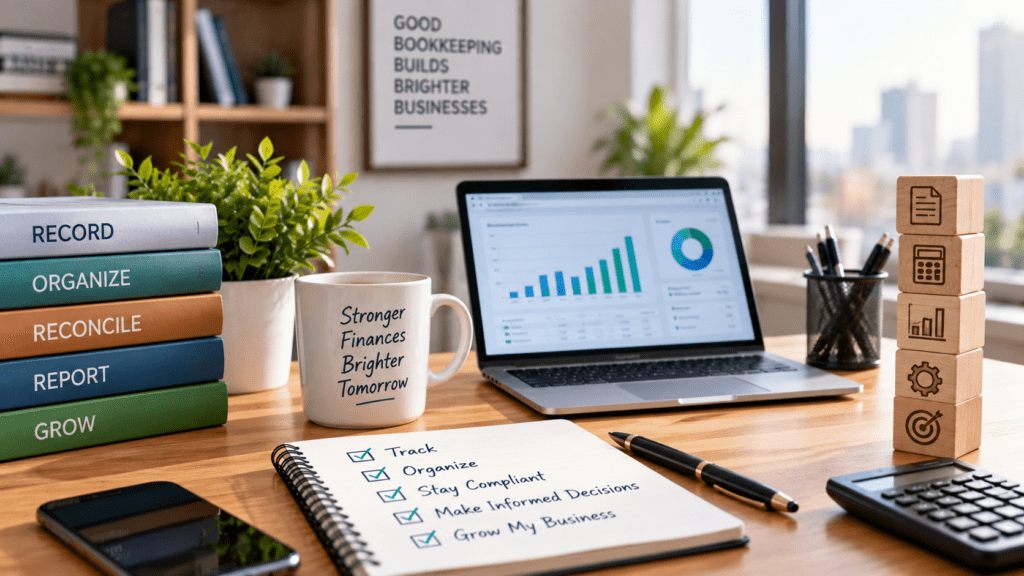
The 7 Bookkeeping Basics Every Small Business Owner Should Know
1. Keep Business and Personal Finances Separate
Open and use dedicated business accounts whenever possible.
Mixing personal and business transactions complicates expense tracking and can create unnecessary confusion when reviewing financial records.
Keeping your finances separate makes your records easier to organise and review.
2. Track Every Business Transaction
Record money coming into and leaving the business.
This includes:
- Sales
- Operating expenses
- Vendor payments
- Customer refunds
- Business purchases
Regularly tracking every transaction is one of the most important bookkeeping habits.
3. Categorise Transactions Correctly
Each transaction should be placed in an appropriate category.
Common categories include:
- Revenue
- Operating expenses
- Assets
- Liabilities
- Owner’s equity(Complete Guide For Business Owner’s)
Accurate categorisation helps create more useful financial reports. Putting transactions in the right categories helps you get more useful financial reports. Store receipts, invoices, bills, and bank statements in an organised system.
Storing documents digitally makes them easier to find when you need to review transactions or share information with a professional.
5. Reconcile Your Accounts Regularly
Bank reconciliation means comparing your bookkeeping records with your bank or credit card statements.
This helps identify:
- Missing transactions
- Duplicate entries
- Recording errors
- Unexpected charges
Regularly checking your records against your bank statements is a simple but important bookkeeping step.
6. Review Your Financial Reports
Looking at your financial reports helps you see how your business is doing.
Three important reports are:
- Profit and Loss Statement: Shows income and expenses.
- Balance Sheet: Shows assets, liabilities, and equity.
- Cash Flow Statement: Shows how cash moves through the business.
7. Follow a Consistent Schedule
Bookkeeping is easier when it becomes part of your routine.
If you wait several months to update your books, you might miss information and end up with extra work. Get Started With Small Business Bookkeeping
If you are new to bookkeeping, start with a simple process.
Step 1: Choose a Recordkeeping Method
You can manage books manually, with spreadsheets, or through bookkeeping software.
The best choice depends on how many transactions you have and how complex your business is.
Step 2: Set Up Your Chart of Accounts
A chart of accounts organises your financial categories.
Think of it as the filing system for your business finances. It works like a filing system for your business finances: assets, liabilities, and equity.
Step 3: Record Transactions Consistently
Create a regular process for entering and reviewing transactions.
Step 4: Reconcile Your Accounts
Compare your records against bank and credit card statements.
Step 5: Review the Results
Use your reports to understand profitability. Use your reports to see your profits, expenses, and how cash moves in your business. Categorise → Reconcile → Review → Report
This is an easy framework for anyone learning. This is a simple way to learn the basics of bookkeeping for Beginners
Bookkeeping software can reduce manual work and make it easier to organise your financial information. as:
- Bank transaction imports
- Expense categorization
- Invoicing
- Receipt storage
- Financial reporting
- Accountant or bookkeeper access
QuickBooks is one of the tools many small businesses use, but software alone will not keep your books accurate. Beginners should review automatically categorised transactions instead of assuming every suggestion is correct.
Technology can speed up bookkeeping, but you still need to review your records regularly.
Common Bookkeeping Mistakes to Avoid
Many small business owners make the same mistakes.
Mixing Personal and Business Expenses
This makes records harder to understand.
Waiting Until Tax Season
Ignoring Bank Reconciliation
If you do not review your accounts regularly, errors can go unnoticed.
Losing Receipts and Documents
If you lose documents, it becomes harder to check your transactions.
Looking Only at Your Bank Balance
Your bank balance alone does not show your profits, what you owe, or your future cash needs.
A Simple Bookkeeping Checklist
Weekly
- Record recent transactions
- Save receipts and invoices
- Review unpaid customer invoices
Monthly
- Reconcile bank accounts
- Review expenses
- Review profit and loss results
- Check outstanding bills
Quarterly
- Review overall business performance
- Identify significant changes in expenses or revenue
- Review cash flow trends
- Prepare financial information for planning
Following this routine can make bookkeeping less stressful and part of your regular business process.
When Should You Hire a Professional Bookkeeper?
DIY: Doing your own bookkeeping can work for new businesses, but as your business grows, getting professional help can be valuable.
Consider additional help when you have:
- Increasing transaction volume
- Multiple bank accounts
- Employees
- Complex expenses
- Inventory
- Limited time to maintain records
- A need for more reliable financial reporting
A professional bookkeeper can keep your records organised, and higher-level financial experts can help you understand the numbers and plan.
For example, good bookkeeping supports cash flow forecasting, financial reporting, and planning as your business grows. ows.
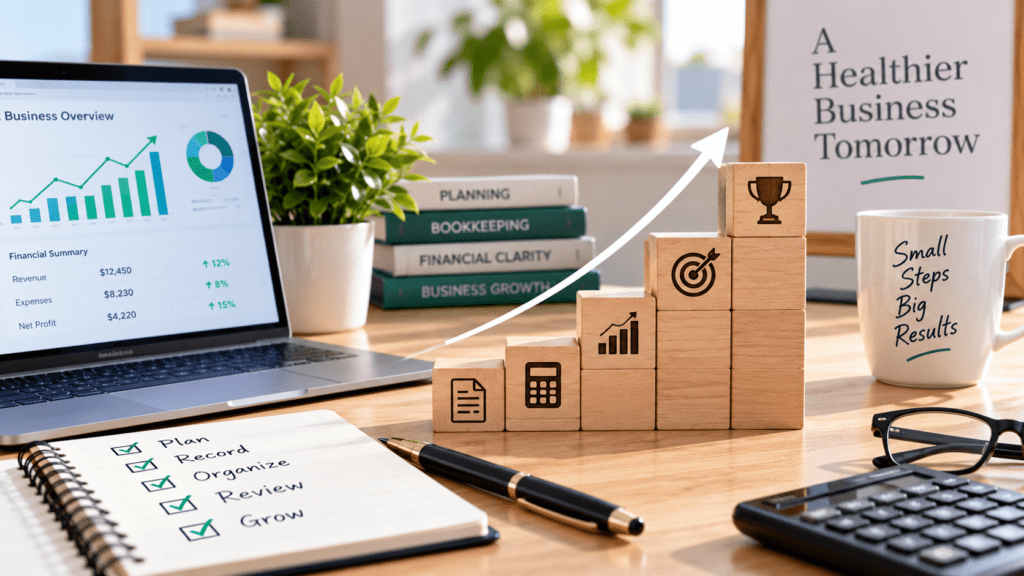
How Good Bookkeeping Supports Better Business Decisions. Bookkeeping is about more than just keeping your records organised.
Accurate Bookkeeping → Clear Financial Reports → Better Financial Visibility → Better Business Decisions. When your records are up to date and accurate, you can better understand your profits, track expenses, manage cash flow, and plan for growth. As your business grows, this information can help you get more advanced financial advice, such as cash flow forecasting or working with a Fractional CFO.
Frequently Asked Questions
Can I Do My Own Bookkeeping?
Yes, manyYes, many small business owners do their own bookkeeping at first. The main thing is to keep a regular process and review your records often. en Should I Update My Books?
Weekly or monthly. It is usually easier to keep up with bookkeeping every week or month rather than waiting months. ed Bookkeeping Software?
Not always. The best system depends on your business’s complexity, but software can make tracking and reporting easier.
What Is the Most Important Bookkeeping Habit?
Consistency. Recording and reviewing your finances regularly is usually better than trying to catch up after months of missing records.
What Is the Difference Between a Bookkeeper and a Fractional CFO?
A bookkeeper mainly keeps your financial records accurate.
A Fractional CFO uses that information to help with forecasting, planning, analysis, and making big decisions. Learning the basics of bookkeeping is an important step for every small business owner.
You do not need to be an accountant to understand the basics. Start by keeping business finances separate, recording transactions regularly, organising documents, reconciling accounts, and reviewing your reports. Keep your financial information accurate enough to understand your business and make better decisions.